Production glossary
Custom Apparel Terms Explained: What You Need to Know Before You Order
The custom apparel world uses shorthand that can feel opaque when you place your first order. This glossary covers the terms you'll see in quotes, proofs, and production updates so you can make decisions with confidence.
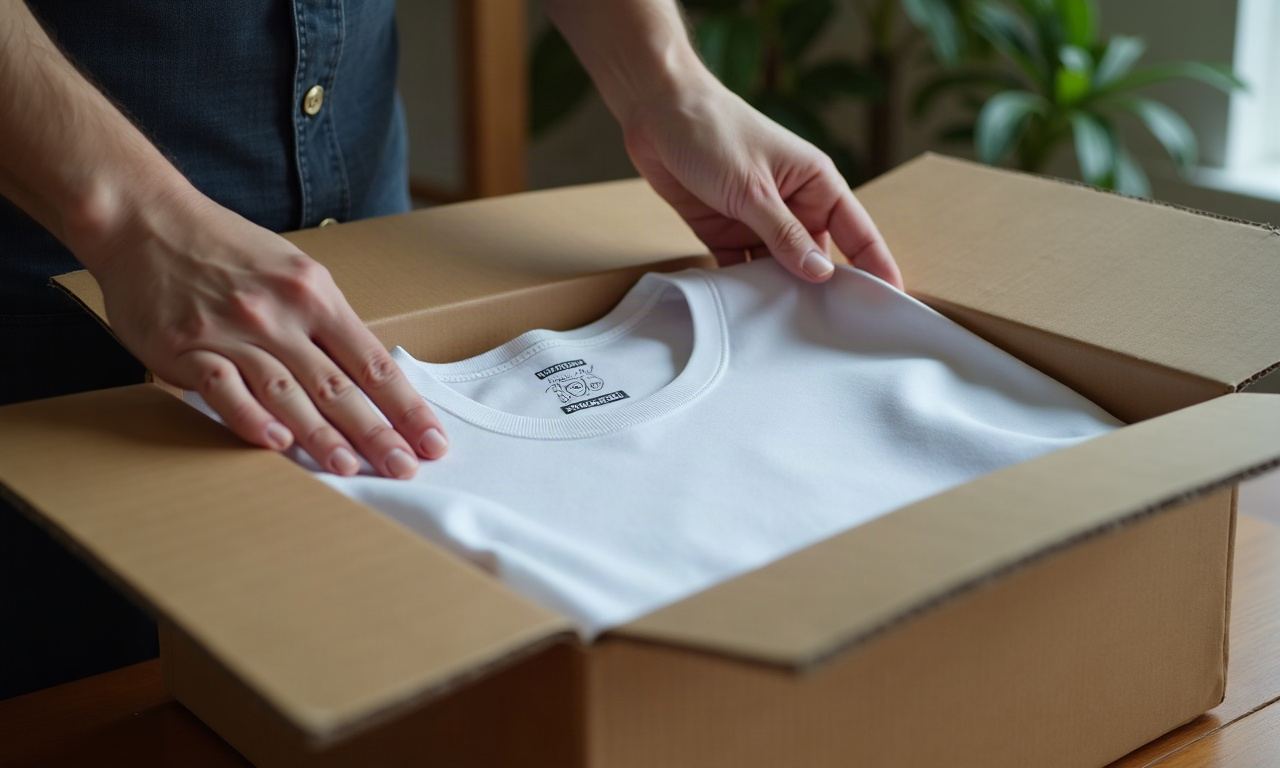
Whether you're ordering shirts for a product launch, jerseys for a rec league, or tote bags for a local festival, you'll encounter terms like DTF, GSM, and Pantone matching. Some describe printing methods, others refer to garment weights or thread counts, and a few signal decisions you'll need to make about placement, size, or color. Understanding these terms before you request a quote helps you describe what you want clearly and evaluate what different suppliers can deliver.
Printing and decoration methods
DTF (direct-to-film) printing uses heat to transfer full-color designs from a printed film onto fabric; it works on cotton, polyester, and blends, and handles gradients and fine details well. Screen printing applies ink through a mesh stencil, one color at a time; it's durable and cost-effective for large runs of simple designs. Embroidery stitches thread directly into the fabric; it adds texture and works best for logos, text, and designs without photographic detail. Vinyl heat transfer cuts solid-color shapes from sheets of vinyl and presses them onto the garment; it's clean and bold but not suited to intricate artwork. Each method has trade-offs in color range, durability, texture, and minimum order size.
Garment specifications and fabric weights
GSM (grams per square meter) measures fabric weight; a lightweight tee is around 145 GSM, midweight hoodies sit near 280 GSM, and heavyweight workwear exceeds 400 GSM. Ring-spun cotton is softer and smoother than open-end cotton because the fibers are tightly twisted during spinning. Blends combine cotton with polyester to reduce shrinkage and increase durability; common ratios are 50/50 or 60/40 cotton-poly. Pre-shrunk garments are washed once during manufacturing to minimize size changes after the customer's first wash. Knowing these specs helps you choose garments that match your event's season, wear conditions, and washing expectations.
Color matching and ink systems
Pantone (PMS) codes are standardized color references used to match brand colors precisely; you give a supplier your Pantone number and they mix or digitally match that exact shade. CMYK (cyan, magenta, yellow, black) is the four-color process used in full-color printing; it can reproduce photographs and gradients but may not hit every Pantone spot color perfectly. Thread color matching in embroidery uses a supplier's thread library; most shops stock several hundred shades and can get close to any brand color. RGB (red, green, blue) is the color model screens use; designs created in RGB often shift when converted to CMYK or thread, so it's worth reviewing a proof. If your brand colors must be exact, share Pantone codes and ask for a physical proof before approving the full run.
Design placement and print areas
Print area refers to the maximum width and height a design can occupy on a given garment location; standard chest prints are typically 12 by 16 inches, while sleeve prints are much smaller. Left chest placement is the small logo area on the upper left front of a shirt, usually 3 to 4 inches wide, common on polos and workwear. Full back prints cover most of the back of a shirt and are popular for event artwork, band graphics, and team rosters. All-over print (AOP) applies a design across an entire garment, including seams and sleeves; it requires specialized equipment and is quoted separately. Knowing standard placements helps you design artwork at the right scale and avoid requesting layouts that aren't feasible or would cost significantly more.
Order mechanics and turnaround components
A design proof is a digital or physical mockup showing how your artwork will look on the finished garment; you approve it before production starts. Turnaround time is the number of business days between proof approval and the date your order ships, not including design revisions or shipping transit. Minimum order quantity (MOQ) is the smallest number of pieces a supplier will produce; some methods and suppliers have no minimum, while others require 12, 25, or more. Setup fees cover the cost of preparing screens, digitizing embroidery files, or creating color separations; they're common in screen printing and are often waived for reorders of the same design. Understanding these mechanics helps you plan lead time, budget for all costs, and avoid surprises when you're working toward an event date.
Before you request a quote
- Pick your garment type, color, and approximate quantity
- Decide where the design will appear on each piece
- Have your logo or artwork in a vector or high-resolution format
- Know your brand's Pantone codes if color precision matters
- Confirm your ship-to address and target delivery date
- Ask whether setup fees, shipping, or taxes are included in the quoted price
Custom apparel production involves choices about method, materials, and color that directly affect how your finished pieces look and hold up. Learning the terminology before you place an order lets you ask the right questions, compare quotes accurately, and communicate changes clearly when you check a proof. At Dailymedios, design file setup and color matching are included, and we reply to questions within one business day so you can move from artwork to finished goods without guesswork.
Ready to start an order or have questions about a project?
Write through the contact form to upload your design, describe what you need, or ask about production options. We reply within one business day with a proof and quote.